
Scams & fraud awareness
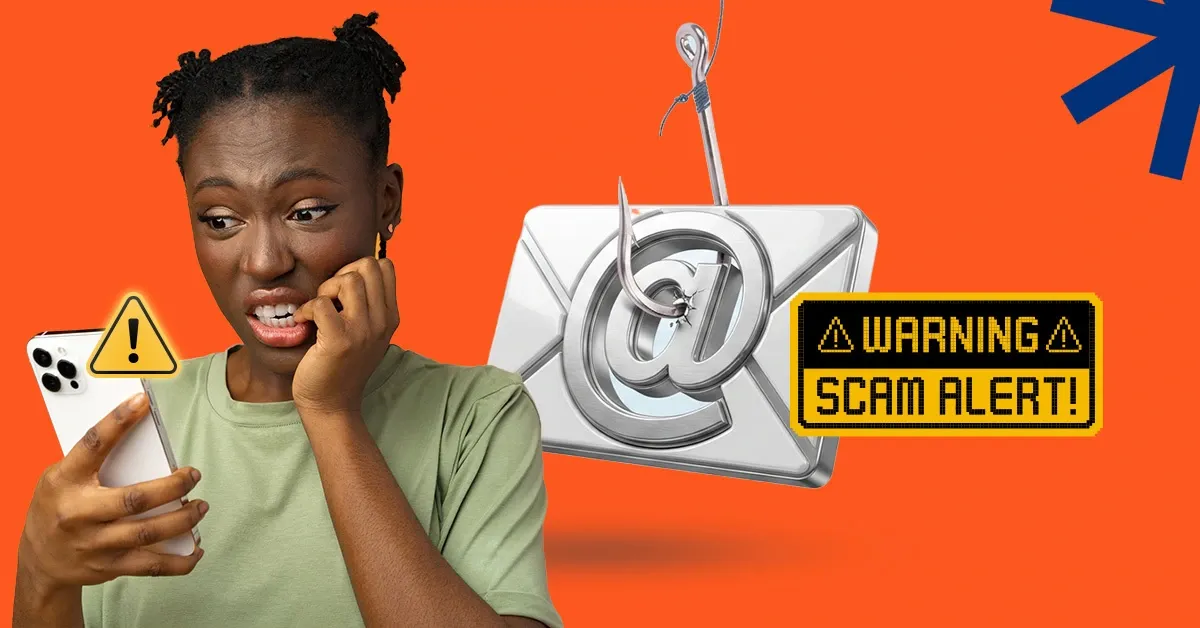
Fraudsters and scammers are becoming more clever in how they operate. As the world and technology evolve, the techniques used by criminals do too. At MonieWorld we try to help prevent this. However, it’s important that you’re vigilant and alert, to protect yourself and your money.
Here, we’ll explore different types of common scams, and ways you can help keep your money safe.
If you think you've been a victim of a fraud or a scam, contact us straight away.
What is fraud?
Fraud is a criminal act to deceive you and take your money. It’s a transaction that you didn’t make or authorise.
What is a scam?
A scam is where you’re tricked into making or authorising a payment to a criminal’s account. On apps like ours, it’ssometimes referred to as Authorised Push Payment Scams. Scammers may impersonate banks, family and friends, or even build fake relationships in order to request money from you. They will use email, phone calls and texts that will look and sound genuine.
Common types of scams
- Investment scams – scammers may try and persuade you to invest in products that are often non-existent or promise unrealistic returns.
- Romance scams – scammers build emotional connections through dating sites or social media to win your trust, often refusing video calls or claiming to work abroad, eventually asking their targets to send money for various fabricated emergencies.
- Marketplace scams – scammers may advertise an item for sale on an online marketplace. The product may not exist and will not arrive or you will receive a much lower value product after you have paid for it.
- Employment scams – scammers may pose as employers offering attractive job opportunities but may ask for upfront payment for training or background checks and disappear once they receive your money.
- Crypto scams – using the popularity of cryptocurrencies, the scammer may encourage you to join ‘get rich quick’ opportunities. Scammers promote unrealistic wealth-building programs or fake trading platforms.
- Impersonation scams - scammers may contact you pretending to be from your bank, payment service provider or the police; informing you of unusual payments on your account and asking you to transfer your money to a 'safe' account.
How you can stay safe
- Be suspicious of contact which is ‘out of the blue’ and claiming to be from a position of authority.
- Never send money, cryptocurrency, or gifts to someone you haven't met in person, and watch for romance scam red flags like refusing video calls, and avoiding in-person meetings
- Verify the details of contacts through an independent source and contact them on known contact details if you are unsure.
- Never send money to someone you haven't met in person, no matter how convincing their story sounds. Be cautious if someone you meet online avoids video calls, moves the conversation off the platform quickly, or declares strong feelings unusually fast. If something feels off, talk to someone you trust before acting - scammers rely on urgency and secrecy to stop you from thinking clearly.
- Never transfer money unless you are 100% sure you know the person you are transferring to.
- Never share or reveal your security information like passwords, login details, OTPs / verification codes to anyone. We will never ask you to reveal this information.
- Don't rely on what cold callers tell you. Independently verify their identity: hang up, find the official number (from your statement, website, or card), and call back directly. If it's really your bank, they'll confirm everything.
- Research the investment you are being offered and speak to Trading Standards if you are still unsure.
- Check the Financial Conduct Authority (FCA) register to see if the firm or individual you are dealing with is authorised.
- Monitor your accounts on a regular basis. Check for suspicious transactions. If you find anything suspicious, report it to us immediately.
- Use secure websites that start with https and check that a closed padlock icon is present.
What to look out for
- Does the investment seem too good to be true? If you think this, it often is the case and likely to be a scam.
- Be suspicious of unsolicited emails. Listen to your instincts, if something doesn’t feel right, then stop and question it.
- Inaccuracies and spelling mistakes in emails or messages
- Threatening or urgent-sounding ‘act now’ suggestions
- Requests to open an attachment or click on a link that are asking you to input personal details.
Reporting Fraud
If you suspect you have been a victim of fraud or a scam, contact us as soon as possible.
Resources
- TakeFive - TakeFive - To Stop Fraud | To Stop Fraud (https://takefive-stopfraud.org.uk)
- FCA Scam Smart – ScamSmart - Avoid investment and pension scams | FCA.org.uk
- Fraud Focus - Fraud Focus newsletter - GOV.UK (gov.uk)
- The Little Book of Scams - The Little Book of Big Scams – 5th Edition (https://met.police.uk)

Moniepoint GB Limited (trading as "MonieWorld") is a company registered in England and Wales (with company number 15500471). Moniepoint GB is a distributor of PayrNet Limited, a company registered in England and Wales (with company number 09883437) and authorised by the Financial Conduct Authority under the Electronic Money Regulations 2011 (FCA reference 900594) to issue electronic money and provide payment services.
Moniepoint UK Limited (trading as "MonieWorld") is a company registered in England and Wales (with company number 07930355). Moniepoint UK Limited is authorised by the Financial Conduct Authority under the Electronic Money Regulations 2011 (FCA reference 900098) to issue electronic money and provide payment services.
The registered office of Moniepoint GB Limited and Moniepoint UK Limited is 8th Floor, 22 Upper Ground, Sea Containers House, London, United Kingdom, SE1 9PD.
All new customer accounts opened on or after 1 December 2025 will be provided by Moniepoint UK Limited, and all customer accounts opened before this date will be migrated from Moniepoint GB Limited to Moniepoint UK Limited. You will be contacted individually to inform you of your migration date. To find out which entity provides your account, log in and view the T&Cs or contact customer support.
GBP accounts with sort code 04-35-91 are provided by Moniepoint GB and GBP accounts with sort code 04-19-29 are provided by Moniepoint UK Limited.